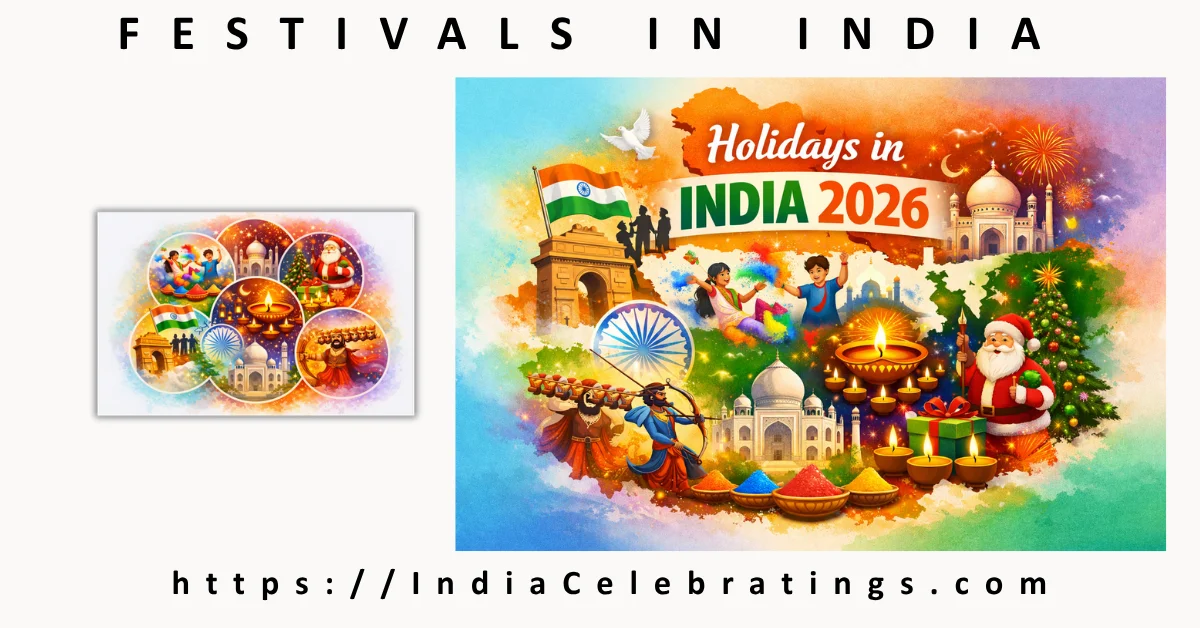
India is often described as a land of diversity, and this diversity is most beautifully visible in its festivals and holidays. Throughout the year, people across the country celebrate occasions that are rooted in history, religion, culture, and national pride.
These celebrations are not limited to one community or region. Instead, they bring people together, creating a shared sense of joy and belonging.
Festivals in India are more than just days off from work or school. They are moments of connection. Families come together, homes are decorated, traditional foods are prepared, and communities celebrate with enthusiasm. Whether it is the vibrant colors of Holi or the glowing lights of Diwali, each festival carries a unique emotion and meaning.
In this guide, we will explore the major holidays and festivals in India in 2026. The focus will be on widely celebrated national festivals that are recognized across the country. Along with dates, you will also get a clear understanding of their importance and how they are celebrated.
Understanding Public Holidays in India
Before we look at the festivals themselves, it is important to understand how holidays are categorized in India. This helps in making sense of why some holidays are observed nationwide while others may vary.
National Holidays in India
India officially recognizes three national holidays. These are celebrated across the entire country and hold great historical importance.
Republic Day (गणतंत्र दिवस), celebrated on January 26, marks the day when the Constitution of India came into effect in 1950. It is a symbol of India becoming a republic, where the power lies with the people. The day is observed with grand parades, especially in New Delhi, showcasing India’s cultural richness and military strength.
Independence Day (स्वतंत्रता दिवस), observed on August 15, commemorates India’s freedom from British rule in 1947. It is a day filled with patriotic spirit. The Prime Minister hoists the national flag at the Red Fort, and people across the country celebrate with flag hoisting ceremonies, cultural programs, and patriotic songs.
Gandhi Jayanti (गांधी जयंती), celebrated on October 2, honors the birth anniversary of Mahatma Gandhi. Known as the Father of the Nation, Gandhi’s principles of truth and non-violence continue to inspire millions. The day is marked by prayers, tributes, and remembrance events across India.
Gazetted and Restricted Holidays
Apart from national holidays, India also has gazetted and restricted holidays. These categories help manage the wide variety of festivals celebrated in the country.
Gazetted holidays are officially recognized by the government, and most public offices, banks, and institutions remain closed on these days. These include major festivals such as Diwali, Eid, and Christmas.
Restricted holidays, on the other hand, are optional. Employees can choose a limited number of these holidays based on their personal beliefs or cultural preferences. This system reflects India’s diversity, allowing people from different backgrounds to celebrate festivals that are important to them.
Major Holidays and Festivals in India 2026 (Chronological Overview)
India’s calendar is filled with important festivals that occur throughout the year. Below is an overview of the major festivals in 2026, arranged in chronological order.
Beginning of the Year: New Year and Republic Day
The year in India begins with New Year’s Day on January 1. While it is a global celebration, it is widely observed in India as well. People welcome the new year with hope, resolutions, and celebrations with friends and family. Cities are full of energy, and many people attend gatherings, parties, or spend quiet time with loved ones.
Soon after, the country celebrates Republic Day (गणतंत्र दिवस) on January 26, 2026 (Monday). This is one of the most important national days in India. The highlight of this day is the grand parade held in New Delhi. It showcases India’s military strength, cultural diversity, and technological achievements. People across the country watch the parade on television and participate in local celebrations.
Schools, offices, and institutions organize flag hoisting ceremonies and cultural programs. The atmosphere is filled with patriotism, and people remember the values of democracy and unity that define the nation.
Spring Celebrations: Holi and Eid ul-Fitr
As winter fades and spring arrives, India begins to celebrate some of its most joyful festivals. One of the most loved among them is Holi (होली), celebrated on March 4, 2026 (Wednesday). Known as the festival of colors, Holi brings a sense of fun and freedom.
People gather in open spaces and play with colors, water, and music. The festival breaks social barriers, as people of all ages come together to celebrate. It is also associated with the victory of good over evil, based on ancient stories. Homes are filled with sweets and festive food, and the entire atmosphere becomes lively and cheerful.
Around the same period, Eid ul-Fitr (ईद-उल-फितर) is expected to be celebrated on March 21, 2026 (Saturday), marking the end of the holy month of Ramadan. This festival holds deep spiritual significance for Muslims. It is a time of gratitude, prayer, and charity.
On Eid, people wear new clothes, offer special prayers, and greet each other with warmth. Families prepare delicious meals and share them with relatives and neighbors. The spirit of generosity and togetherness makes this festival special not just for Muslims but for people from all communities who join in the celebrations.
Early Summer Festival: Eid ul-Adha
As the year progresses, another important festival, Eid ul-Adha (ईद-उल-अजहा), is expected to be observed on May 27, 2026 (Wednesday). This festival is also known as the festival of sacrifice.
It commemorates the willingness of Prophet Ibrahim to sacrifice in obedience to God. The message of this festival is about faith, devotion, and selflessness. People offer prayers, and those who can afford it perform the ritual sacrifice, sharing the meat with family, friends, and those in need.
Eid ul-Adha is also a time of social connection. Families gather, meals are shared, and acts of charity are emphasized. The festival reflects values of compassion and generosity, which are central to Indian culture as well.
This marks the first half of the year, filled with meaningful and joyful celebrations. In the next phase, we will explore the remaining major festivals, including Independence Day, Dussehra, Diwali, and Christmas, along with their deeper cultural significance and celebrations.
Mid-Year and Autumn Celebrations: Independence Day and Gandhi Jayanti
As the year moves forward, India celebrates one of its most important national occasions, Independence Day (स्वतंत्रता दिवस), on August 15, 2026 (Saturday). This day marks the country’s freedom from British rule in 1947. It is not just a public holiday but a deeply emotional day for millions of Indians.
The celebrations begin with the Prime Minister hoisting the national flag at the Red Fort in New Delhi, followed by a speech that reflects on the nation’s journey and future. Across the country, schools, colleges, and local communities organize flag hoisting ceremonies, cultural programs, and patriotic performances. The atmosphere is filled with pride, unity, and remembrance of the sacrifices made by freedom fighters.
Soon after, Gandhi Jayanti (गांधी जयंती) is observed on October 2, 2026 (Friday). This day honors the birth anniversary of Mahatma Gandhi, a leader who played a key role in India’s independence through his principles of truth and non-violence. People pay tribute by visiting memorials, organizing prayer meetings, and reflecting on his teachings. The day encourages values of peace, simplicity, and harmony.
Festive Season Begins: Dussehra (दशहरा)
As autumn arrives, the festive season in India truly begins with Dussehra (दशहरा), celebrated on October 20, 2026 (Tuesday). This festival symbolizes the victory of good over evil and is deeply connected with the story of Lord Rama from the ancient epic Ramayana.
According to tradition, Lord Rama defeated the demon king Ravana on this day, representing the triumph of righteousness. Across India, this story is brought to life through dramatic performances known as Ramlila. In many places, large effigies of Ravana are burned, accompanied by fireworks and celebrations.
Dussehra is not just about mythology. It carries a deeper message that no matter how powerful evil may seem, truth and goodness will always prevail. Families come together, fairs are organized, and the atmosphere becomes festive and vibrant. It also marks the beginning of preparations for the biggest festival of the year, Diwali.
Diwali (दिवाली): The Festival of Lights
One of the most important and widely celebrated festivals in India is Diwali (दिवाली), which will be observed on November 8, 2026 (Sunday). Known as the festival of lights, Diwali represents the victory of light over darkness and good over evil.
The festival is associated with the return of Lord Rama to Ayodhya after defeating Ravana. To welcome him, people lit lamps across the city, a tradition that continues even today. Homes are cleaned and decorated with lights, diyas, and rangoli designs. The entire country glows with brightness and joy.
Families gather to perform prayers, especially dedicated to Goddess Lakshmi, who is believed to bring wealth and prosperity. Sweets are prepared and shared, gifts are exchanged, and people celebrate with fireworks. Diwali is not just a festival; it is an experience filled with warmth, happiness, and togetherness.
Winter Celebration: Christmas (क्रिसमस)
As the year comes to an end, India celebrates Christmas (क्रिसमस) on December 25, 2026 (Friday). Although it is a Christian festival, it is enjoyed by people from all communities across the country.
Christmas marks the birth of Jesus Christ and is celebrated with prayers, decorations, and gatherings. Churches are beautifully decorated, and midnight mass is an important tradition for many. Homes are adorned with Christmas trees, lights, and ornaments.
Families and friends come together to share meals, exchange gifts, and enjoy the festive atmosphere. Cakes and sweets play an important role in the celebrations. The spirit of Christmas is about love, kindness, and giving, which resonates deeply with Indian values as well.
This completes the journey through the major festivals celebrated in India throughout the year. Each festival carries its own story, emotion, and cultural depth, making India’s festive calendar truly unique.
Why Festivals Are Important in India
Festivals in India are not just cultural events. They are deeply connected to the way people live, think, and relate to each other. Every celebration carries meaning, whether it comes from history, religion, or shared traditions. Over time, these festivals have become an important part of everyday life.
One of the most important roles of festivals is that they bring people together. In a country as large and diverse as India, festivals create a sense of unity. People from different backgrounds, languages, and beliefs take part in each other’s celebrations. This creates understanding and strengthens social bonds.
Festivals also provide a break from routine life. In the middle of busy schedules, these occasions give people time to relax, reconnect with family, and enjoy simple moments. Homes are cleaned and decorated, special meals are prepared, and families spend time together. These moments create memories that last for years.
Another important aspect is the economic impact. During festivals, markets become active, businesses grow, and local artisans get opportunities. From clothing and decorations to sweets and gifts, many industries depend on the festive season. In this way, festivals support both culture and the economy.
How People Celebrate Festivals Across India
While each festival has its own traditions, there are certain patterns that can be seen across most celebrations in India. These shared elements give Indian festivals their unique identity.
One of the most common aspects is family gatherings. Festivals are often seen as a time to come home. People travel long distances just to be with their loved ones. Meals are shared, stories are exchanged, and relationships are strengthened.
Food plays a central role in every celebration. Each festival has its own special dishes, often prepared using traditional recipes passed down through generations. Whether it is sweets during Diwali or festive meals during Eid, food brings people together and adds joy to the occasion.
Decoration is another important part of celebrations. Homes are cleaned, decorated with lights, flowers, and colors. This not only creates a festive atmosphere but also reflects a sense of renewal and positivity.
Community celebrations are equally important. Many festivals are celebrated in public spaces with large gatherings, music, and performances. These events allow people to participate in something bigger than themselves, creating a shared sense of happiness.
Planning Your Holidays in India 2026
With so many festivals spread throughout the year, planning holidays in advance can make the experience even more enjoyable. Knowing the dates of major festivals allows people to organize travel, family visits, and celebrations more effectively.
Many festivals create long weekends, especially when they fall close to weekends. This gives people the opportunity to take short trips or spend extended time with family. Popular destinations become lively during festivals, offering a unique cultural experience.
Traveling during festivals also allows visitors to see India at its most vibrant. Cities and towns come alive with decorations, lights, and celebrations. However, it is important to plan early, as transportation and accommodation can fill up quickly during peak festive periods.
For those who prefer a quieter experience, planning ahead also helps in avoiding crowded places. In either case, being aware of the festival calendar makes it easier to make the most of the year.
FAQS
1. How many national holidays are there in India?
India has three official national holidays: Republic Day (गणतंत्र दिवस), Independence Day (स्वतंत्रता दिवस), and Gandhi Jayanti (गांधी जयंती). These are celebrated across the entire country.
2. Are all festivals celebrated across India?
While many major festivals like Diwali, Holi, Eid, and Christmas are widely celebrated, some festivals are specific to certain regions. This article focuses on the most widely celebrated national-level festivals.
3. Why do festival dates change every year?
Many Indian festivals are based on lunar calendars rather than the standard calendar. This is why their dates change slightly every year.
4. What is the biggest festival in India?
Diwali (दिवाली) is often considered the biggest festival in India due to its widespread celebration and cultural importance.
Final Words – Celebrating the Spirit of India
India’s festivals are a reflection of its rich culture, deep traditions, and strong sense of community. From the patriotic pride of Independence Day to the joyful celebrations of Diwali and Holi, each festival adds color and meaning to life.
These celebrations are not limited to rituals or customs. They represent emotions, values, and connections that bring people closer. They remind us of the importance of family, kindness, and togetherness.
As you explore the holidays in India in 2026, you will discover not just dates and events, but a way of life that celebrates every moment with warmth and joy.
This is the true spirit of India — a spirit that celebrates, connects, and inspires.