
Wire Cross-Section Area Calculator
This calculator converts the diameter or radius of a wire into its cross-sectional area using the standard circle area formula.
Formula:
Area = π × (D ÷ 2)²
or
Area = π × r²
Wires are used everywhere in modern life. From home electrical systems to electronics, vehicles, and machines, wires carry power and signals safely from one place to another.
One of the most important properties of a wire is its cross-sectional area. This area tells us how thick the wire is and how much current it can safely carry.
The Wire Cross-Section Area Calculator makes it easy to find this value. Instead of doing manual math, you simply enter the wire’s diameter or radius, and the calculator instantly gives you the area in square units. This saves time and helps avoid mistakes, especially for students, electricians, engineers, and DIY users.
What the Wire Cross-Section Area Calculator Is
A Circular Area Conversion Tool
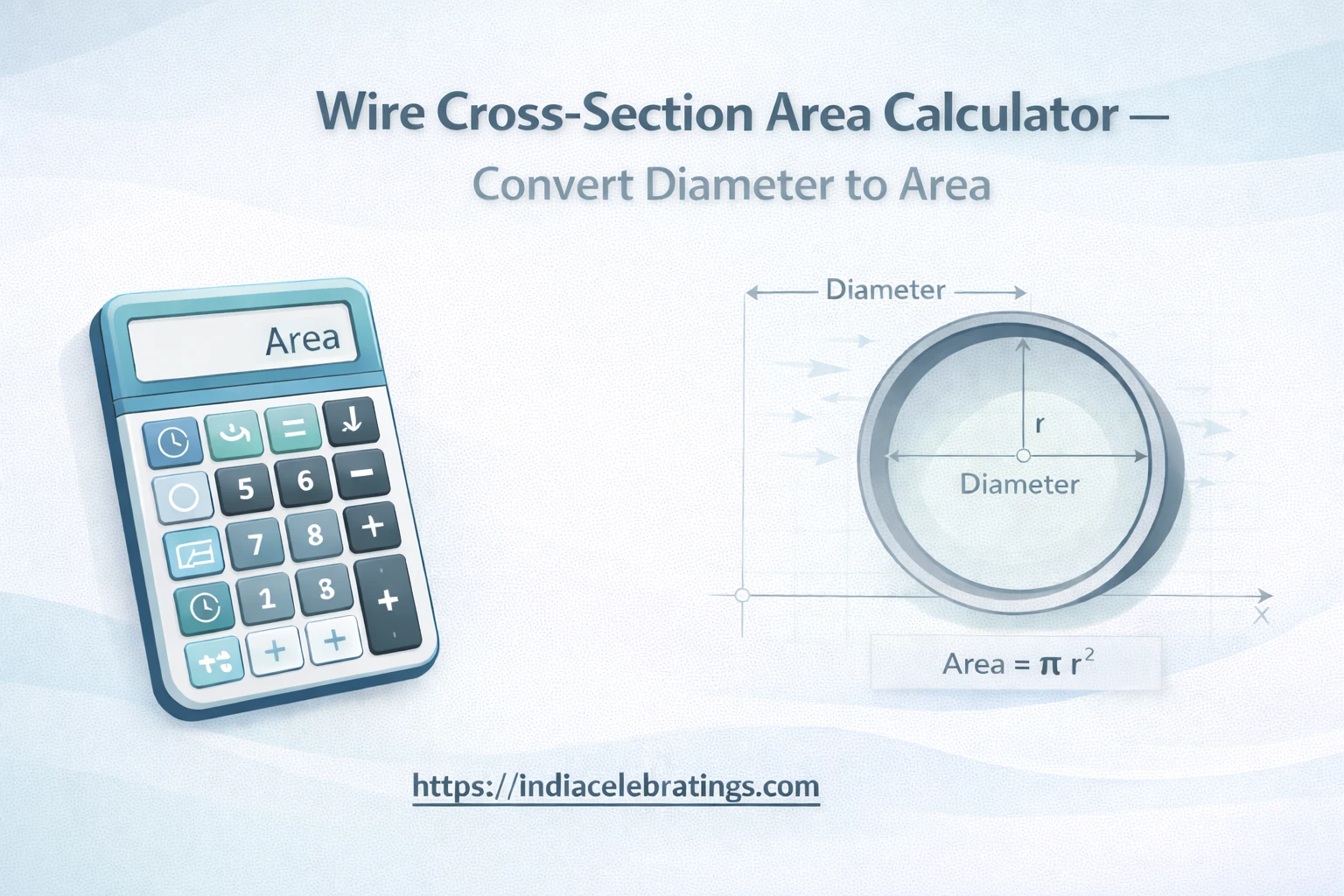
The Wire Cross-Section Area Calculator is an online tool that calculates the area of a wire’s circular cross section. Most wires have a round shape, so their cross section is a circle. By using the correct geometry formula, the calculator converts the wire’s diameter or radius into an area value.
Why Wire Cross-Section Area Matters
The cross-sectional area of a wire affects:
- How much electrical current it can carry
- How much resistance it has
- How much heat it produces
- How strong it is
Knowing this area helps people choose the right wire size for safe and efficient use.
How the Calculator Works
Step 1: Enter the Diameter or Radius
You can enter either:
- The diameter of the wire, or
- The radius of the wire
The calculator automatically uses the correct formula based on your input.
Step 2: Click Calculate
The calculator applies the circular area formula.
Step 3: View the Result
The cross-sectional area is shown in square units such as mm², cm², or in².
Key Formula Used
Using Radius
Area = π × radius²
Using Diameter
radius = diameter ÷ 2
Area = π × (diameter ÷ 2)²
Or simply:
Area = π × diameter² ÷ 4
These formulas give the area of a circular wire cross section.
Step-by-Step Example
Example: Electrical Wire
Given:
- Diameter = 4 mm
Step 1: Convert to radius
4 ÷ 2 = 2 mm
Step 2: Apply the formula
Area = 3.1416 × 2²
Area = 3.1416 × 4
Area ≈ 12.57 mm²
Result:
The wire’s cross-sectional area is 12.57 mm².
Features of the Wire Cross-Section Area Calculator
Simple and Clear Input Design
The calculator is designed to be easy for everyone. You only need to enter one value, either the diameter or the radius. The input boxes are clearly labeled, so users know exactly what to type. This makes the tool suitable for students, electricians, and beginners.
Instant and Accurate Results
Instead of doing manual calculations, the calculator gives you instant results. It uses the correct mathematical formula, so the answer is accurate every time. This saves time and reduces the chance of human error.
Supports Multiple Units
You can use different measurement units such as millimeters, centimeters, inches, or feet. As long as the unit is consistent, the calculator will give correct results.
Helpful for Learning
Students can use the calculator to understand how wire thickness affects area. Teachers can also use it to demonstrate basic geometry and electrical concepts.
Useful for Real Projects
Electricians, engineers, and technicians can use the calculator to check wire sizes for safety and performance. It helps in choosing the right wire for different electrical loads.
Saves Time on Conversions
Instead of converting diameter to area manually, the calculator does everything in one step. This is especially helpful when working with many wire sizes.
Uses and Applications
Electrical Wiring and Safety
In electrical systems, the wire’s cross-sectional area determines how much current it can safely carry. Wires that are too thin can overheat and cause fires. Electricians use area calculations to choose safe wire sizes for homes, offices, and industrial systems.
Electronics and Circuit Design
In electronic devices, small wires carry signals and power. Engineers use cross-sectional area to control resistance and ensure proper performance of circuits.
Engineering and Manufacturing
Factories use wires in machines, motors, and control systems. The calculator helps engineers select the correct wire thickness for strength, durability, and electrical efficiency.
Physics and Science Education
Students learning about electricity and resistance use wire area values in formulas such as resistance = length ÷ area. The calculator makes learning easier and faster.
DIY and Home Projects
People working on home wiring, lighting, or hobby electronics can use the calculator to choose safe wire sizes and avoid dangerous mistakes.
Automotive and Industrial Wiring
Vehicles and industrial machines use many types of wires. Proper area calculation helps prevent overheating and electrical failure.
Helpful Tips for Accurate Results
Measure Carefully
Use calipers or a ruler to measure the wire’s diameter accurately.
Use Consistent Units
Do not mix inches with millimeters.
Double-Check Input Values
Small measurement errors can change the final area.
Know the Wire Type
Some wires have insulation. Measure only the metal part, not the coating.
Common Mistakes to Avoid
Confusing Diameter and Radius
Radius is half of the diameter.
Measuring the Insulated Part
Only the metal core should be measured.
Mixing Units
Always use one unit system.
Guessing Measurements
Use proper measuring tools for accuracy.
FAQs
What is wire cross-sectional area?
It is the area of the wire when cut across its width.
Why is wire area important?
It affects current capacity, resistance, and safety.
Can I use diameter instead of radius?
Yes, the calculator supports both.
What units can I use?
mm, cm, inches, feet, and more.
Is the calculator accurate?
Yes, when correct values are entered.
Final Words
The Wire Cross-Section Area Calculator is a simple and powerful tool for finding the area of circular wires. It helps users choose safe wire sizes, understand electrical behavior, and complete projects with confidence.
Whether you are a student, electrician, engineer, or DIY enthusiast, this calculator saves time, improves accuracy, and makes wire area calculations easy for everyone.